
Candidates Are Not Client Leads
For recruiting agencies, the commercial prospect is an employer-side buyer. Candidate interest and job applications do not establish demand for recruiting services.
Win attention for agency new business or enterprise sales with targeting and qualification specific to the motion you actually run. LeadGPT manages email outbound for employer-client acquisition and enterprise buying conversations, without treating hiring activity as confirmed demand.
Agency new business targets buyers of recruiting services. Enterprise outreach targets your offer’s buying group; neither motion guarantees a placement or deal. Actual price, pilot quantity, advance payments, timeframe and under-delivery terms are agreed in writing. We do not charge twice for the same outcome.
Useful email outbound starts with fit, context and a clear standard for commercial interest.
For recruiting agencies, the commercial prospect is an employer-side buyer. Candidate interest and job applications do not establish demand for recruiting services.
Large accounts often involve sponsors, evaluators and purchasing stakeholders. A useful first conversation does not establish consensus across a long buying cycle.
Open roles can guide recruiting research, but an employer may hire internally or use existing suppliers. Service interest must emerge in the conversation.
Repeated emails to poorly chosen contacts risk credibility and inbox health. Large-account outreach needs relevant roles and managed sending practices.
Expansion, hiring and strategic initiatives help explain account context. None establishes a purchasing project, approved budget or willingness to use a new supplier.
“Send details” may mean curiosity rather than commercial interest. Qualification must separate a useful exchange from an accepted employer-client or enterprise lead.
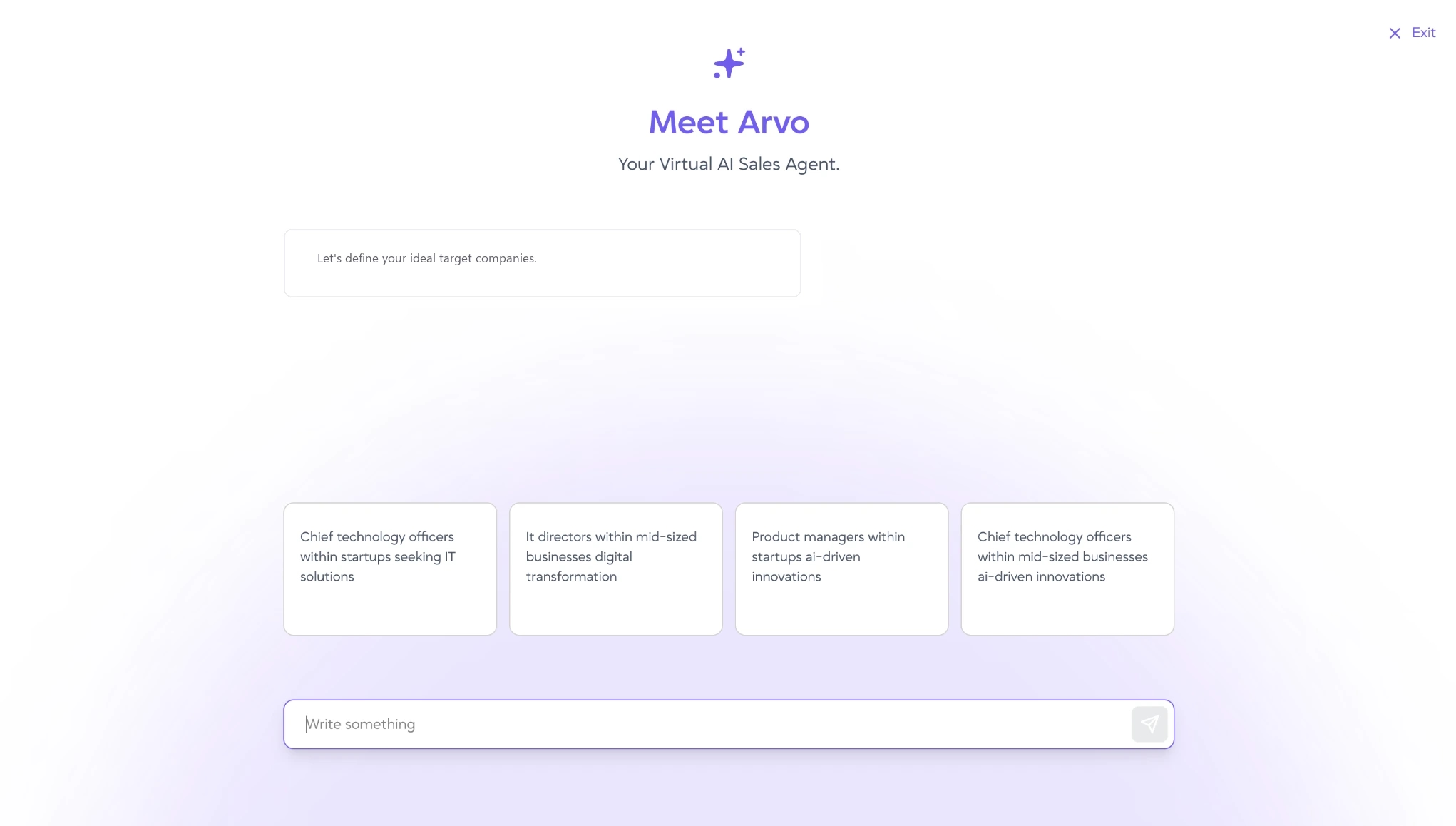
ARVO: ICP search, YES/NO shortlist, estimate approval and email review. LeadGPT runs email and qualification; your team owns sales follow-up and conversion.
Agree agency employer-client criteria or enterprise account criteria, including the roles relevant to your service or product and the exclusions.
ARVO supports natural-language ICP search and YES/NO shortlist review. Hiring, expansion and initiatives inform account selection, not a claim of confirmed buying demand.
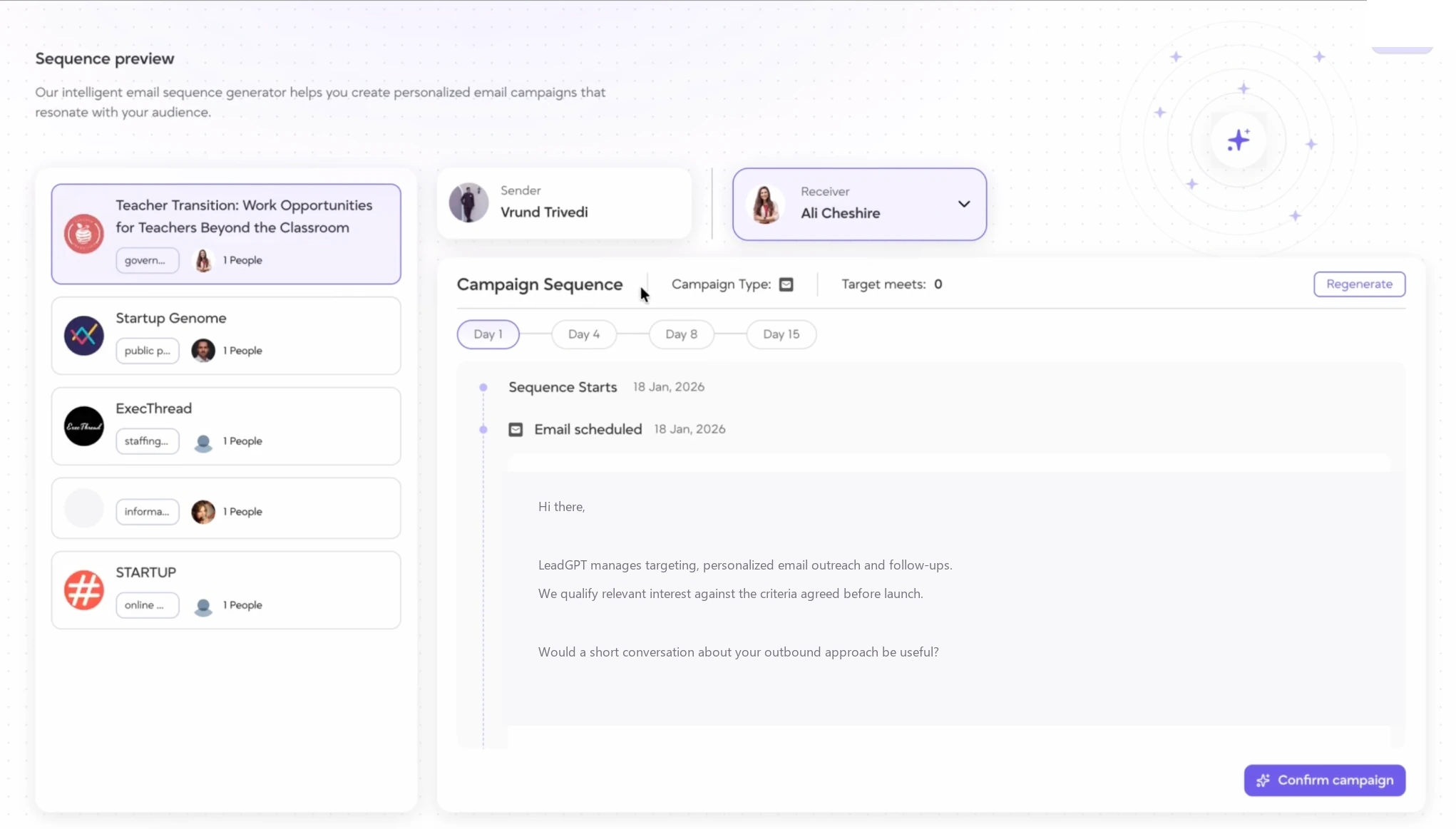
ARVO supports estimate approval and email review. LeadGPT distinguishes recruiting-service value from the proposition for an enterprise buying group.
LeadGPT manages email infrastructure, outreach and follow-ups within the approved account scope, keeping the two commercial propositions distinct.
LeadGPT qualifies employer-client or enterprise interest and hands over the thread. Candidate and informational replies are insufficient; meetings require qualified attendance.
Choose accepted qualified interest or an attended qualified meeting. Agree the ICP, relevant roles and acceptance criteria before email outreach begins.
Published pricing range: US$150–$200 per accepted qualified lead. Receive contact details and the full thread; your sales team owns follow-up and conversion.
Require agreed ICP, a relevant role and explicit, meaningful commercial interest, with the thread; candidate or informational replies alone do not qualify.
Choose meetings with actual qualified attendance, not bookings. One stakeholder’s participation does not mean the full enterprise buying group is aligned.
Published pricing range: US$300–$500 per completed qualified meeting. Qualification and actual attendance are required; booking alone is not delivery.
A meeting counts only when the qualified prospect actually attends under the written attendance rules. Invitations and prospect no-shows are not completed outcomes.
Your signed agreement sets the precise rate, quantity, advance, written delivery window and remedy for under-delivery. Email activity is not the purchased outcome; qualification does not guarantee a sale or remove your team’s conversion responsibility.
Actual price, pilot quantity, advance payments, timeframe and under-delivery terms are agreed in writing. We do not charge twice for the same outcome.
Discuss recruiting services with relevant employer-side buyers.
Start account conversations with context for a longer buying process.
Keep acceptance criteria distinct across the two motions.
LeadGPT manages the email infrastructure and campaign execution, rather than asking your team to assemble and operate an outbound sending stack.
Fit before sending volume. Account research places hiring, expansion and initiatives in context without assuming supplier demand or budget.
LeadGPT manages domains, mailboxes, warm-up and deliverability monitoring. Sending pace and inbox health need ongoing attention; no provider can guarantee every message reaches an inbox.
Review the Privacy Policy and discuss campaign data, exclusions and handling requirements before launch. Managed email does not remove your team’s governance or review responsibilities.
Research may draw on public company, role and business context from sources such as LinkedIn, the web and business directories. Source availability varies; this is not a promise of native integrations, exhaustive coverage or verified purchasing intent.
Delegate email execution while retaining approval of the audience, the offer and the sales relationship.
Routine email execution. LeadGPT manages campaign mechanics; you approve account criteria and own stakeholder development, proposals and conversion.
Less coordinating account research and routine email follow-up.
Keep sellers on employer needs and enterprise stakeholder development.
Documented employer-client or enterprise interest against the right criteria, not a mixed list of replies.
Review employer-client and enterprise conversations against their respective acceptance criteria.
Review email activity, replies and delivered qualified outcomes within available campaign reporting. Opens, clicks and reply counts are not qualification evidence on their own.
Separate supplier interest from hiring news, candidate replies and requests for general information.
Compare regional response within each sales motion rather than blending unlike account segments.
Track accepted interest and qualified attendance, not assumed placements or completed enterprise deals.
Confirm available reporting detail and campaign data before launch. Qualified interest and attended meetings are sales starting points, not guaranteed opportunities, closed deals or revenue.
Discuss whether you need to:
Use a strategy call to assess fit, qualification and the campaign scope before committing.
Discuss your ICP, relevant roles, qualification evidence and chosen outcome. Before launch, agree the precise rate, quantity, advance, written delivery window and under-delivery remedy in signed terms.